Thursday, November 14, 2024

My 2024 NL Cy Young Ballot, Explained

Kyler Strickler

November 14, 2024


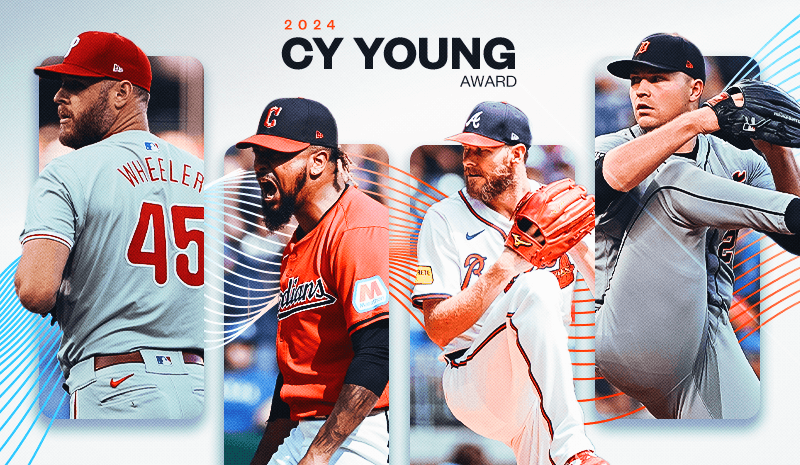
Just like the AL, the winner of this race is already pretty much wrapped up. That doesn't make this award any less exciting. An unlikely triple crown winner is joined by a steady ace, a rookie phenom, a breakout campaign, and a converted reliever on my ballot 

1. Chris Sale

In many ways, Chris Sale and Tarik Skubal's campaigns could not be more different. Skubal was one of the favorites for the award coming into the year, and the young ace delivered on those expectations. Sale entered this year coming off the worst performance of his career in which he posted a 4.30 ERA in his final year with Boston. Yet, when it came to results, Sale and Skubal's 2024's were oddly statistically similar. Just like his AL counterpart, Sale secured the NL pitching triple crown, leading the league in wins (18), ERA (2.38), and strikeouts (225). This will result in a Cy Young win, shockingly the first of the lefty's storied career. After his career was seemingly almost over, Sale proved that he still had it and more in 2024, and reignited the Hall of Fame conversation around him that had dissipated in the last half-decade.

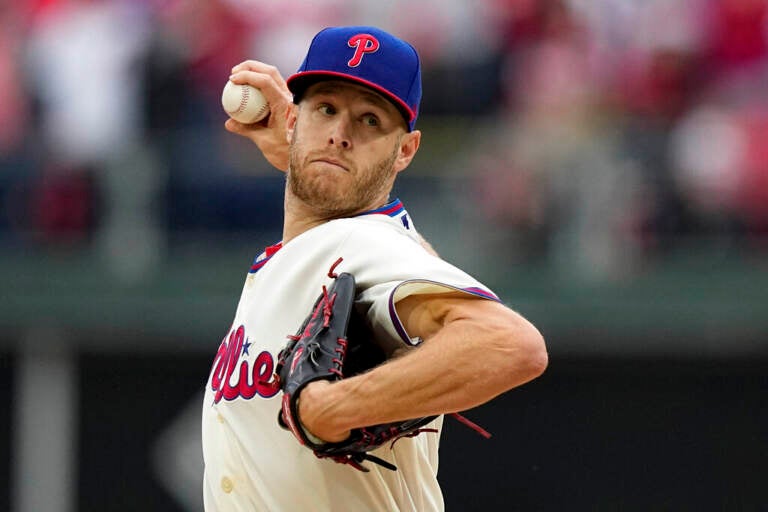
2. Zack Wheeler

Zack Wheeler is about a safe bet as it gets. Since he joined the Phillies in 2020, the righty has only posted an ERA over 2.92 one time, which was a 3.61 in 2023 that landed him 6th in NL Cy Young voting. Even if you want to call that a "down year", Wheeler completely eliminated any inklings that he was on the downswing, turning in the best season of his career in 2024. Over 200 innings, the Phillies' ace led the league in WHIP along with a career-low 2.57 ERA, adding up to a solid 6.1 WAR. While now extended, 2024 was a statement cap to Wheeler's original 5-year contract with Philadelphia, of which might go down as one of the best free-agent acquisitions of all time.

3. Paul Skenes

Let's be clear. The only reason Paul Skenes is not the Cy Young winner is because he didn't get called up until early May. Over a full season, Skenes was tracking for 251 strikeouts in only 195 innings to go along with a 1.96 ERA and 0.947 WHIP. These numbers are simply not seen from starting pitchers, especially rookies. Skenes not only completely blew hitters away with his fastball, he seemingly one-by-one kept improving his secondary pitches to ridiculous success. By the end of the year, his fastball, "splinker," sweeper, and changeup were all top of the line, completing an arsenal that made hitters look silly. Skenes will be the heavy favorite for the 2025 Cy Young, and he should be. 

4. Hunter Greene

While Paul Skenes was the most exciting young flamethrower in the NL Central, Hunter Greene sneakily posted a massive breakout season. His fastball was the fifth most valuable pitch in the entire MLB, as hitters simply could not catch up to it. This was a huge turnaround from 2023, where it was not only his worst pitch, but probably the worst of any pitcher in the whole league. After 2 seasons where his ERA sat in the mid to high 4s, Greene kept it down to a robust 2.75 this year off the back of a miniscule 1.018 WHIP. If Greene is able to take another step forward, there are seemingly no limits to how good he can get. 

5. Reynaldo Lopez

This is a weird one. A starter for his first four years in the league, Reynaldo Lopez struggled so heavily with control that he got shifted to a bullpen role. This ended up being a great move, as the next 3 years saw him post a 3.14 ERA out of the pen. All of this is why it was so surprising that the Braves gave Lopez a 3 year 30 million dollar contract before 2024 - to pitch as a starter. While it was panned at the time, clearly it worked out. Stepping in for an injured Spencer Strider, Lopez utterly dominated - albeit in a limited sample. With a similar volume to Skenes, Lopez finished with a 1.99 ERA and a 1.106 WHIP, securing his future as a starting pitcher for one of the best teams in the league. 


Just missed: Logan Webb, Dylan Cease, Shota Imanaga


Monday, November 11, 2024

My 2024 AL Cy Young Ballot, Explained

Kyler Strickler

November 11, 2024


Not a single pitcher has won the triple crown since 2011, when both Clayton Kershaw and Justin Verlander were at the height of their powers. Oddly enough, 2024 also saw one pitcher from each league pace the field in all of the triple crown categories. Surely these two will win the Cy Young, but who will fill out the rest of the ballot? 


1. Tarik Skubal

In a year where few pitchers truly stood above the rest, Tarik Skubal was dominant. He captured the AL pitching triple crown, leading the league in ERA (2.39), strikeouts (228), and wins (18). The Tigers ace was the backbone of a team that shocked many - after selling at the deadline, the squad made a legendary push to the playoffs and even eliminated an Astros team on the last legs of its dynasty. Throughout this run, the Skubal was Detroit's only reliable starting pitcher, as manager A.J. Hinch opted for a variety of "bullpen chaos" on non-Skubal days. After a solid second half last season, many expected Skubal to take a step forward. However, few saw this absolutely massive leap coming. 


2. Emmanuel Clase

No reliever has placed as high as second in Cy Young voting since 2006 when Trevor Hoffman did it with the Padres. However, Emmanuel Clase just put up a deserving season. Clase led the league in saves for the third year in a row, but it was different this year. After an okay 2023 campaign where he put up a 3.22 ERA and blew 12 saves, 2024 saw him post a miniscule 0.61 ERA with only 3 blown saves. The numbers get more and more ridiculous the further you look, including a 0.659 WHIP, 5 earned runs allowed (over the entire year), and a month and a half long stretch where he did not allow a single run to score. Wile Clase's October struggles may cloud his overall season, his regular season was immaculate. 


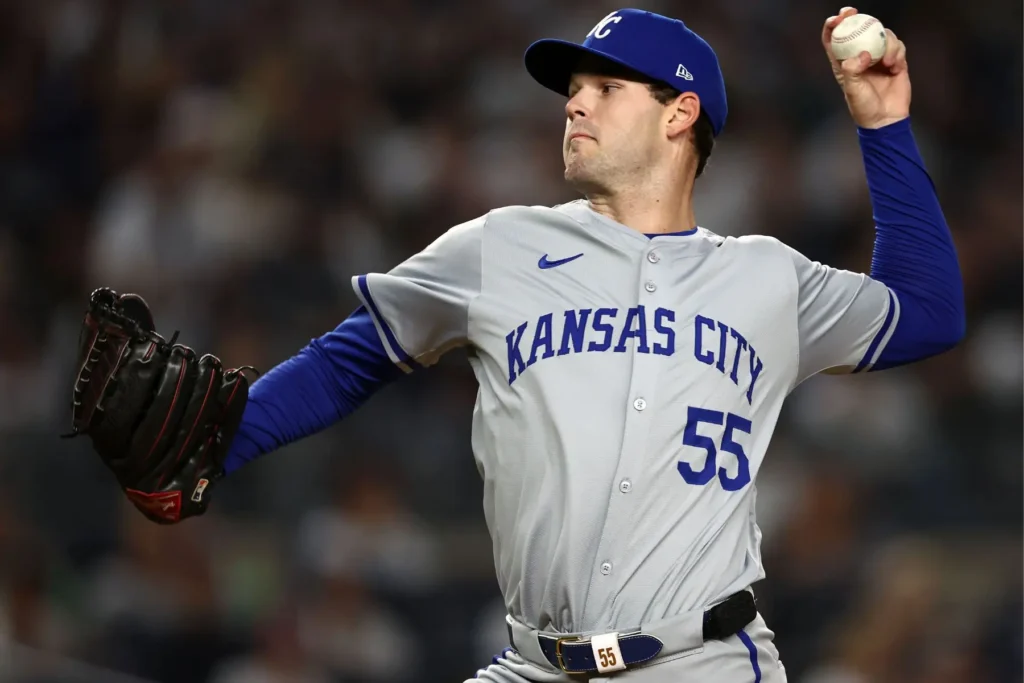
3. Seth Lugo

After being primarily a reliever from his age 26 to age 32 seasons, Seth Lugo has proven that the transition to a starter can be seamless. After a good 2023 year with the Padres in his first go-around as a starter, Lugo earned a solid 3-year 45 million dollar contract with the Royals, a move that went largely unnoticed to the casual baseball world. Little did people know that this would be one of the most important acquisitions of the entire offseason. The Royals took a giant leap forward and made the playoffs, largely on the back of the starting rotation - anchored by Lugo. While far from the most flashy pitcher, Lugo parlayed his solid control and command to go deep in games, which led to a 3.00 ERA in 33 starts. Finally, just as a cherry on top, he was able to take home a gold glove for his efforts. 


4. Cole Ragans

Similar to Lugo, without Cole Ragans, the Royals don't go far this year. Another reliever turned starter, the Rangers flipped Ragans to the Royals for Aroldis Chapman at the 2023 deadline. Maybe the Rangers don't regret the trade, as the move helped them win a championship, but it is hard to say they didn't lose the trade. Since coming to Kansas City, Ragans has posted a sub-3.00 ERA and has been dominant while doing so. Leading qualified arms in strikeouts per 9 innings, the lefty provided the Royals with a fantastic one-two punch along with Lugo to lead the way to the playoffs. Still just 26, all eyes are on Ragans to take a similar step forward that Skubal did this year. 


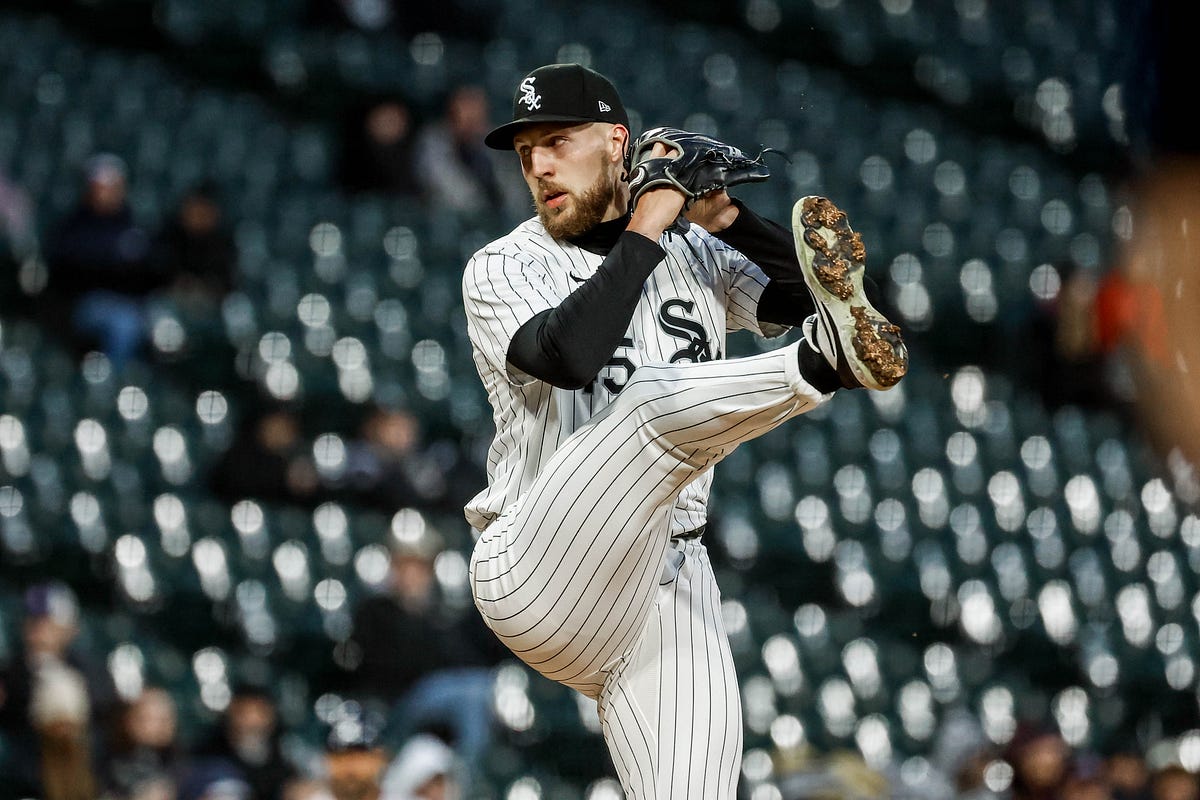
5. Garrett Crochet

The 2024 White Sox were the worst team in modern MLB history. Only the 1899 Spiders finished with a worse record, a team that no living person was around to see. However, the team had a single bright spot, which was Garrett Crochet. Yet another converted reliever, the lefty put up massive strikeout numbers - 12.9 per 9 innings. Crochet's 3.58 ERA was good, but when you consider that he had a horrendous defense behind him, the number should have easily been below three. With all that being said, why is Crochet in fourth on my ballot? Simple, he does not go deep in games. Despite starting 32 contests, Crochet averaged only 4.2 innings in those starts and struggled with his stamina mightily in the second half of the season. If Crochet can go deeper in games he has the potential to be a true ace, but even with those flaws he can put up great seasons.


Just Missed: Ronel Blanco, Corbin Burnes, Logan Gilbert

Wednesday, November 6, 2024

My 2024 NL MVP Ballot, Explained

Kyler Strickler

November 6, 2024


Next on the list is my NL MVP ballot. While the first few picks are just as cut-and-dry as the AL, I had a much harder time with the bottom of the list. For example, picking two between Chris Sale, Jurickson Profar, and Bryce Harper was extremely tough. Without further delay, lets get into the list. 

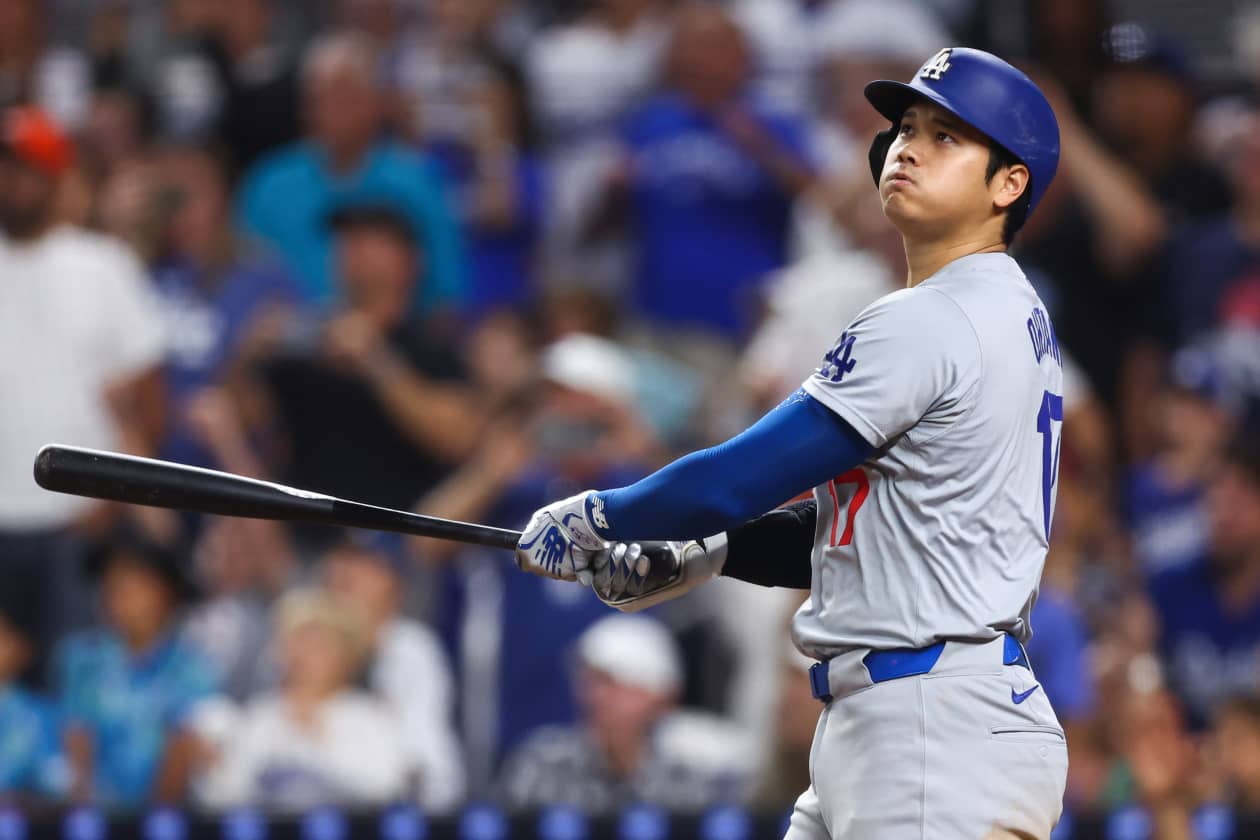
1. Shohei Ohtani

Just like the AL, this MVP will be unanimous. While recovering from a torn UCL and relegated to DH, Shohei Ohtani put up the first 50/50 season in MLB history, leading the league in WAR (9.2), plate appearances, runs, home runs, RBI, OBP, slugging, OPS, and total bases. Just a year after Ronald Acuna put up likely the most complete offensive season we had seen since Barry Bonds, Shohei Ohtani not only one-upped it, but left it in the dust completely. As long as Ohtani is healthy enough to hit, he should be the MVP favorite for the rest of the 2020's.


2. Francisco Lindor

Before Ohtani went nuclear in September, many thought Francisco Lindor was having a season that rivalled him. While playing elite defense at shortstop, Lindor put up the best offensive season of his career, falling a single steal short of a 30/30 season and being the anchor of a Mets team that surprised many. Those in favor of a Lindor MVP campaign claim that the Mets would have been out of the playoffs completely without Lindor, and they are right. However, Ohtani simply was better in every category besides defense, and a difference of 2 WAR is nothing to scoff at. 

3. Ketel Marte

2024 is the year the curse of "even-year Ketel" became a thing of the past. Ever since he broke out, in even years, Ketel Marte was an average player. In odd years (2019, 2021, 2023), he put up MVP-caliber production along with positional versatility. 2024 put an end to this trend, as Marte completed arguably his best season to date, all while staying healthy. Headlining the most powerful lineup this year, Marte hit nearly .300 while crushing 36 bombs, a personal high. On top of this, he played the best defense of his career since 2018, a massive return to form after struggling the previous few seasons. 

4. Elly De La Cruz

While not the most valuable player, Elly De La Cruz is probably the most electric player in the league. After an up-and-down rookie season, Elly made progressions in 2024 that resulted in 5.2 WAR. The fastest man in professional sports swiped 67 bags and was truly a nightmare on the basepaths for opposing pitchers, causing havoc even when he wasn't stealing. While he did lead the league in strikeouts and errors, Elly is easily above average at the plate and in the field, and just slight fine-tuning could result in him being an MVP favorite going forward. 

5. William Contreras

This is the year that William Contreras officially took the crown as the best catcher in the league. Getting better every single season, Contreras not only put up a 129 OPS+, he also played the best defense of his career, and even recorded 9 steals. The Brewers desperately needed this from Contreras after Christian Yelich went out for the season, and they got it. At this point, Contreras does not have any weaknesses in his game, and one can only wonder what the next step could be for the superstar who is just entering his prime at 26 years old.

6. Marcell Ozuna

Marcell Ozuna will probably never win an MVP. For one, he is permanently limited to the DH spot.  However, for someone to win an MVP as a DH, they have to do something truly historic like what Shohei Ohtani just did, and Ozuna is simply not built for that. On top of this, Ozuna's past of domestic violence allegations and DUI charges do not do him any favors. However, beyond that, Ozuna put up a fantastic season. The Big Bear smashed 39 home runs to the tune of a .302 average, and was the driving force in a disappointing Braves lineup. Coming off his second-best offensive season, Ozuna from the Braves at least deserves some consideration. 

7. Mookie Betts

On my first draft of this list, I had Mookie Betts in fifth place. However, after further consideration, 116 games played is simply not enough. Had he played the whole year, I think that Mookie would have been in serious MVP consideration, as he filled in at every defensive position the Dodgers wanted him to play, including being the teams starting shortstop on opening day. While doing this, he put up fantastic production that included 4.8 WAR, 19 homers, and 16 steals. While he will have to compete with his teammate Shohei Ohtani going forward for MVP consideration, Mookie will always have a place on these ballots. He's simply too good. 

8. Matt Chapman

Matt Chapman puts up odd season after odd season. For a 2-month stretch every year, he will supplement his all-world fielding skills at the hot corner with a bat that rivals the best players in the league, and then the rest of the year he will struggle. While that trend continued this year, his "struggle months" were average instead of horrific, leading to the third baseman putting up an astounding 7.1 WAR. By this metric, some would be surprised that he finished below Cruz, Contreras, Ozuna, and Betts on my list, but Chapman was just a solid player. He is truly special with the glove, but a 125 OPS+ is not MVP-caliber in my book. If he can get his OPS out of the .700s while continuing to dominate in the field, maybe that can change.


9. Jurickson Profar

I don't think a single soul saw this coming. Before this season, Profar had been considered a bust for literally a decade. The former Rangers number one overall prospect nearly doubled his career WAR this year, but WAR doesn't even do this season justice. By Win Probability Added, Profar was the most valuable player in the entire league after Shohei Ohtani. In high-leverage at-bats, he put up a 327 WRC+, nearly 100 points higher than the second place finisher in Juan Soto. Profar simply got massive hit after massive hit for a Padres team that needed the production. It will be interesting to see just how much money Profar made after this campaign. 


10. Chris Sale 

Another surprising one. Many, including me, thought Chris Sale was washed. The former superstar had not produced a good healthy season since 2018, and was traded to the Braves for basically nothing. However, Atlanta apparently saw something the rest of the league did not, as they immediately gave him an extension and slotted him into the top of their rotation. Sale responded by winning the triple crown, nearly matching Tarik Skubal's year exactly. 18 wins, a 2.38 ERA, and 225 strikeouts are simply fantastic in this era of starting pitching, and it cannot be stated enough how much Atlanta needed this performance after Spencer Strider's injury. 


Just missed: Bryce Harper, Willy Adames, Jackson Merrill


Monday, November 4, 2024

My 2024 AL MVP Ballot, Explained


Kyler Strickler

November 4, 2024


The 2024 season featured some legendary campaigns from future hall-of-famers, but who should receive MVP votes? On every voter's ballot, 10 players from each league get consideration, and the results of this voting will inform fans in the future who dominated this season. With that being said, let's get right into my 2024 AL MVP ballot. 


1. Aaron Judge

Everyone knows who is going to win AL MVP, likely unanimously. Aaron Judge just somehow put up a better season than his record-breaking 2022 campaign, posting a 1.159 OPS and 11.4 WAR. 58 homers and 144 RBI are truly legendary totals, and Judge did all this while playing centerfield for the best team in the American League. Many would argue that this should be Judge's third MVP, but a second will have to suffice. 


2. Bobby Witt Jr. 

Second place will probably be unanimous as well. To say that Bobby Witt had a great season is an understatement, as he put up one of the best shortstop seasons in MLB history. Hitting at a .332 clip, Witt led the league in batting average, while also reaching 30/30 for the second time in his career. On top of this, after early-career concerns with his defense, the Royals superstar has come into his own in the field, earning a Gold Glove for his 2024 campaign. Eclipsing the 10 WAR threshold is truly remarkable for a someone who is still just 24 years old, and Witt looks poised to win multiple MVPs down the road. 


3. Juan Soto

Juan Soto comes in third after setting career highs in  both WAR and home runs in his first season with the Yankees. Beyond the numbers, Soto set the table for Aaron Judge the entire year, a luxury that the captain hasn't had in recent seasons. Everyone before the season knew that Juan Soto was going to get paid in free agency, but after this sort of production, the young superstar might make upwards of 700 million. 


4. Gunnar Henderson

Gunnar Henderson finishes in fourth, but even he would tell you it's not how he wanted this year to end. Gunnar was maybe the MVP frontrunner by the All-Star break, as he already had nearly 7 WAR and was leading an Orioles team that looked poised to make a deep playoff run. However, both Henderson and the Orioles stumbled in the second half. Gunnar still put up 8.8 WAR and hit 37 home runs, but he needs to produce at an elite level for a whole season to win the award in the future.


5. Jose Ramirez

Jose Ramirez ends up in fifth on my ballot. J-Ram is no stranger to MVP votes, as there has only been one season since 2017 he didn't receive at least one. The Guardians longtime third baseman was once again the definition of a five-tool player, coming up only one homer shy of a 40-40 season. Nobody will be surprised when the most consistent player of our generation once again finishes between 3rd and 6th on the ballot again next year. 


6. Jarren Duran

Jarren Duran in fact does not need a tennis racket. The breakout young star produced a great season which saw him put up 8.7 WAR, featuring leading the league in both doubles and triples along with truly outstanding defense and 34 steals. While the Red Sox fell flat this year, Duran did not. With one of the best farm systems in the MLB headlined by perhaps the most exciting position player prospect in Roman Anthony, Duran could soon find himself headlining one of the best lineups in baseball. 


7. Vladimir Guerrero Jr. 

Vladimir Guerrero Jr. needed this year. After the 2021 season, many had pegged Guerrero as possibly the best hitter in the league, as he nearly won a triple crown and truly set the league on fire. The next two years were supremely disappointing, though, as he saw his OPS dip into the .700s. However, this year was a return to form. While he didn't quite reach the peaks of 2021 this year, Vlad still hit .323 with a .940 OPS. Going into 2025, Vlad will likely be the consensus best first baseman in the league, with his 2024 campaign a driving force of that. 


8. Tarik Skubal

Simply put, Tarik Skubal was the best pitcher in the league this year. He won the pitching triple crown, the first time it has been accomplished in a full-length year since Justin Verlander and Clayton Kershaw did it in 2011. To win MVP, a pitcher has to put up a truly legendary season while at the same time being in a league where no batter makes a good run at the award. While Skubal's 2.39 ERA and 228 strikeouts do not quite meet that standard, he put up a great enough season to earn low-ballot consideration. 


9. Brent Rooker

A former Twins prospect who flamed out, Brent Rooker was basically the lone bright spot at the plate for an Oakland team which experienced a sad final season in it's longtime home. While Rooker broke out in 2023, 2024 saw him make massive improvements which resulted in him being one of the most valuable players in the league. His batting average jumped nearly 50 points to .293, while still being an elite power hitter who hit 39 bombs in a pitcher-friendly ballpark. Despite being a DH, he still managed to post a 5.6 OPS, a truly elite number. 


10. Emmanuel Clase

I never would have thought a reliever could receive an MVP vote from myself, but when you somehow put up 4.4 WAR as in 74 innings pitched, it is hard to ignore. I would argue that this season from Clase is the most dominant reliever season of our generation, as the game was simply over as soon as he toed the mound. You would think that someone who throws a 101-MPH cutter would be a strikeout machine, but Clase instead induces the weakest contact in the league and is ridiculously efficient, allowing the Guardians to deploy him in a variety of situations. 


Just missed: Corey Seager, Yordan Alvarez, Riley Greene
Tuesday, March 1, 2022

Is there a "Madden Curse" in Baseball? Ranking all the MLB The Show Cover Athletes Based on their Performance that Year.

Kyler Strickler
March 1, 2022


Orange County Registrar

What is the "Madden Curse"

While the streak seems to have been somewhat broken in recent years, the "Madden Curse" has been a  theory for decades. The "curse" is that when a player is on the cover of a Madden game, they go on to have either an injury-plagued or terrible season. However, this trend has not been applied to MLB games, so I took it upon myself to see if there was a curse. 

After a legendary season, Shohei Ohtani has been chosen to grace the cover of MLB The Show 22. Let's take a look at how history suggests he will perform this year. 

Methodology

    The primary factor going into these rankings is a player's statistical performance the year they were on the cover. Both counting numbers and advanced stats are weighed equally, using bWAR as a guide. Accolades and league-leading stats are also weighed heavily, as it tells the tale of the player's standing in both the media as well as the league around them. Finally, as a tie breaker of sorts, both playoff performance and performance compared to previous year are taken into account. 

Notes

Until MLB 06: The Show, the games in the series were named after the next year. For these games, I used the stats for the year before the title says, as that is the year the player was currently on the cover. For instance, MLB 2006 came out before the 2005 season, so Vladimir Guerrero's 2005 stats are used instead of his 2006 stats. 


24. MLB The Show 20 - Javier Baez 

.203/.238/.360
Accolades: Gold Glove
bWAR: .8 

    Apologies for the spoiler, but after researching and ranking all of these seasons, it is clear there is basically no "Madden curse" for MLB: The Show, as most of the cover athletes had great seasons. Javier Baez is one of the only exceptions to that rule. 
 
    While the 2020 season was shortened due to COVID-19, Baez was terrible in that sample size. Despite playing every game but one, and facing pitchers fresh off the streets, the 2018 NL MVP runner-up hit only .203. However, that is not even the worst part of his campaign. The most shocking number for the flashy shortstop is his .238 on base percentage, which came as a result of walking an astounding 8 times compared to a terrible 75 strikeouts. To add to the pain, Baez did not even produce in the power or speed department, as he posted only 8 home runs and 3 steals. All of this added up to a 59 ops+, meaning he was slightly better than half as good as a league average hitter. 
    This nightmare of a season continued into the playoffs for Baez, as the Cubs got swept by the Marlins in the wild card series, a team which was completely replaced in the middle of the season because the whole roster got COVID. Baez did not help his case in this series, as he went 1-for-8 with 3 strikeouts.
    The only saving grace for Baez was the field, as he won the NL Gold Glove, resulting in him somehow having a positive bWAR of .8


23. MLB 15: The Show - Yasiel Puig

.255/.322/.436
Accolades: None
bWAR: 1.1 


    After two extremely solid seasons to begin his career, Puig had a rough 2015 in almost every facet of the game. He missed half of the year, but even when he did play he was disappointing. While he still put up an above average OPS+ at 110, the gap power and speed component that Puig brought to the Dodgers in other years was missing. Even if you multiply his counting numbers by two to account for an entire season, he only would have had 22 homers and 6 steals. On top of this, his batting average was a great deal below his career average at .255. In all offensive categories, Puig struggled.
    On defense, Puig played a below average right field. His arm was still strong, but his routes to balls and decision making was harmful to the Dodgers. One has to wonder how much of this was mental - Puig was a superstar just the year before and now he was just a low-value role player.Unfortunately, these struggles continued into the postseason, as he went hitless in 3 NLDS games, resulting in a loss to the Mets. All of this cumulated to 1.1 bWAR, a very underwhelming total.


22. MLB 11: The Show - Joe Mauer

.287/.360/.368
Accolades: None
bWAR: 1.5

    In the movie industry, the sequels are almost always worse. Apparently, the same thing can be said about MLB The Show cover athletes, as Joe Mauer's second straight year as the cover boy went relatively poor. 
Mauer was a unique player. Standing at 6 foot 5, he was the tallest catcher in MLB history. Despite this size, Mauer was never a power hitter, and in half of a season he only hit three home runs and 15 doubles. On top of this, his batting average fell by nearly 40 points from the previous year.     
    Mauer's defense also took a step back, as the normally solid catcher was only barely above average behind the plate. As for the team, the Twins experienced a similar pattern. They went 63-99, finishing last in the division. It was an extremely mediocre year for the possible Hall of Famer.


21. MLB 99 - Cal Ripken Jr.

.271/.331/.389
Accolades: All Star
bWAR: 1.9
    
    If we were going off entire careers, Ripken would be towards the top of this list. However, the Iron Man's 1998 season wasn't notable. Ripken only hit .271 with a dismal .389 slugging, which happened as a result of only 14 home runs and 27 doubles, to go with 61 RBI. While he was never known for his prowess on the base paths, Ripken also did not have a single steal the entire year. Perhaps if he missed time, these numbers could be explainable, but Ripken only missed a single game the entire season. 
    Ripken did make the all-star game in '98, but at this point in his career, these annual appearances were simply due to the legacy of the all-time great. Finally, this was the second season since Ripken's rookie year which he was not an outstanding defender - he was just average at the shortstop position.


20. MLB 2004 - Shawn Green

.280/.355/.460
Accolades: None
bWAR: 2.1 
   
    Shawn Green is one of the lesser-known stars of the steroid era, but he had a few crazy feats during his solid run. This includes a 4-homer game and a 30/30 season, as well as 3 seasons above 6.4 bWAR. However, 2003 was nothing special for the Dodgers star. At age 30, Green's athleticism went downhill, as a year after having 20 stolen bases he had only 8. His power took as similar turn, as he went from 42 home runs in 2002 to 19 in 2003. On top of this, his defense completely disappeared, as he went from a gold-glove winning outfielder to someone the Dodgers had to stick at first base.
    Green was nothing more than an average player in 2003 - he took home no accolades, the Dodgers missed the playoffs, and Green got worse in nearly every statistical category. A 2.1 bWAR is fine, but becomes less desirable when put in perspective. For instance, in 2021, Gavin Lux had an 87 OPS+ as well as being a liability in the field, and he finished with 1.6 bWAR in only 102 games. 


19. MLB 2000 - Mo Vaughn

.281/.358/.508
 Accolades: None
bWAR: 1.8

    Coming off a season in which he finished 4th in AL MVP, Vaughn's 1999 season was nothing to write home about. At the plate, he was solid, as his slashline and counting numbers were fine. He put up a .281 batting average as well as 33 home runs and 108 RBI. While those stats would have been fantastic in the current day, in the late 90s steroid era, the numbers were just okay, resulting in only a 119 OPS+. Once again - an above average year at the plate, but nothing special. This is even more disappointing when you realize the lefty slugger had put up over a 140 OPS+ the last 5 years.
    In the field, Vaughn split his time between first base and DH, but even when he played the field he was a liability. This resulted in a 1.8 bWAR for the year, which sounds about right considering his middling hitting stats and awful glove.


18. MLB 12: The Show - Adrian Gonzalez

.299/.344/.463
Accolades: None
bWAR: 3.7

    There isn't much to say about Gonzalez' 2012 season. Perhaps the most notable thing about it was that Gonzalez was traded from the Red Sox to the Dodgers at the deadline in a blockbuster which also included stars Josh Beckett, Carl Crawford, and James Loney. However, this move which was inconsequential for 2012, as neither team made the playoffs. He didn't take home any accolades, just a year after we won a Silver Slugger, Gold Glove, and made the All-Star team.
    
    It wasn't a bad year by any means, as "A-Gon" hit .299 and still played great defense at the corner. However, despite only missing 3 games, he only poked out 18 home runs, a big step back from his previous years' totals. He finished with a 3.7 bWAR, so he was still an above average player, but the most memorable thing about the season is that it set the table for the Dodgers' dominance in the 2010s.

Note: This year, The Show had an alternate Canadian cover featuring Jose Bautista of the Toronto Blue Jays. Even if that had been the main cover, in 2012 Bautista had one of the worst seasons of his Blue Jays tenure, so this spot would have been about the same.


17. MLB The Show 19 - Bryce Harper 

.260/.372/.510
Accolades: None
bWAR: 4.5
    
    A few years removed from his all-time great 2015 campaign, Harper left the Washington Nationals at the end of the 2018 season and signed a massive contract with the Phillies. With this contract came hefty expectations - perhaps too high. While Harper's 2019 season was by no means bad, it was not up to the 330 million dollar standard fans were expecting. The right fielder hit .260 with 35 home runs, 15 steals, and 114 RBI, but only had a 126 OPS+, one of the worst marks of his career. Harper was less disciplined than ever - as he walked less and struck out more than he ever had. On top of this, the Phillies finished a measly .500, which led to countless "boos" and "overrated" chants during games.
    The season was not all bad, however. Harper's offensive production was still well-above league average, and in 2019 he had his best defensive campaign since his rookie year, grading out as an above-average corner outfielder. All of this led to a 4.5 bWAR season, which is good, but not up to par for the superstar that Harper is. Lucky for Philly fans, he bounced back in a big way in 2021, as he took home the NL MVP with an outstanding offensive season.


16. MLB 2002 - Andruw Jones

.251/.312/.461
Accolades: Gold Glove
bWAR: 4.9

    Andruw Jones' 2001 season is perhaps the hardest campaign to place on this list. The phrase "every rose has its thorns" was never more true than it was for Jones this year, as the electric outfielder turned in one of the most perplexing years of the early 2000's. This year, Jones not only the best defensive centerfielder in the league, he was probably the best defender in the league, period. An outstanding 3.0 dWAR proves this point, as Jones won the Gold Glove and was a vital part of a Braves team that went to the NLCS. 
    The other side of the ball was a different story. At first glance, it doesn't look too bad. 34 home runs and 104 RBI are nothing to scoff at. However, given his production in previous years, 2001 was a major step back for Jones. After four straight years of 20 or more stolen bases, he only swiped 11 bags. His batting average fell more than 50 points from the previous year, and he struck out 42 more times. On top of this, while his home run power was still there, Jones was finding the gaps less than ever, as he finished with a measly 25 doubles, leading to a pitiful 94 OPS+, revealing he was a worse hitter than an average player. Despite his occasional struggles at the plate, Jones still put up a more than acceptable 4.9 bWAR, mostly in part to his fantastic defense. While his offensive struggles hurt his ranking, it is hard to ignore the counting stats and the legendary glove from the Braves longtime centerfielder.


15. MLB 98 - Bernie Williams

.328/.408/.544
 Accolades: All Star, Gold Glove
bWAR: 5.5
 
    As part of the "core four", Williams was a key piece of the Yankees steroid-era dynasty. He put up a very solid season in 1997, headlined by a .328 average and 21 homers. He also had great discipline, walking almost as much as he struck out, a feat which is almost unheard of in the modern MLB. He used this on-base prowess to his advantage, as he also swiped 15 bags.
    As for the field, Williams was probably a little overrated as a centerfielder by the media. He had good speed and range, but his negative dWAR reveals there were much better defensive players at his position in 1997. However, Williams was rewarded with a Gold Glove for his work, so he was doing at least some things right. 
    The 1997 season for Williams was good. It just doesn't stack up to the legendary seasons higher up on this list, but as a solid performer on a playoff team it is hard to say many negative things. 


14. MLB 2005 - Eric Chavez 

.276/.397/.501
Led league in: BB
Accolades: Gold Glove
bWAR: 5.5 

    Chavez's 2004 campaign is largely similar to Williams' just one spot behind him. The longtime third baseman for the A's put up good numbers in only 125 games, especially in terms of his eye and discipline. Chavez somehow led the league in walks despite that missed time, as well as popping 29 homers. While he had a harder time finding the gaps in 2004 with only 20 doubles, his approach and pop totaled up to a 134 OPS+, the best mark of his career. 
   However, if this list was solely based on offensive performance, Chavez's year probably does not stack up to those behind him, specifically Williams and Harper. The tiebreaker for Chavez is his defense. Chavez also won a Gold Glove, but unlike Williams, he deserved it. He put up an excellent 1.4 dWAR at third base, as he flashed the leather nearly every game. While the A's missed the playoffs, a low-ballot MVP finish for Chavez lands him at 14 on this list. 


13. MLB 08: The Show - Ryan Howard

.251/.339/.543
Led league in: G, HR, RBI, 
Accolades: World Series
bWAR: 1.8
  
    While the advanced stat community might see this ranking and cringe, there is no doubt Ryan Howard put up a great 2008 campaign. Yes, Howard's bWAR was only 1.8 in 2008, which places him towards the very bottom of this list. However, this is one of the occasions that the eye test is mandatory. While not quite up to par with his last two seasons, Howard still led the league in home runs, with 48, and RBI, with an astounding 146. The slugging first baseman fit perfectly with the rest of the Phillies' lineup. Jimmy Rollins and Chase Utley would get on base in front of him, and Howard would drive them home time after time. He played every regular season game, and he was the big bat that the machine needed to run. 
    This statistical production netted Howard a second-place finish in NL MVP voting, but that is not the only hardware he took home. The 2008 Phillies won the World Series largely because of Howard, as he hit 3 homers in a 4-1 series win over the Rays. Based on bWAR alone, Howard was only the 9th most valuable player on the championship team. However, nearly every Phillies fan would be the first to tell you the 2008 Phillies do not win the world series without the "Big Piece".


12. MLB 09: The Show - Dustin Pedroia 

.296/.371/.447
Lead league in: R
Accolades: All Star
bWAR: 5.6 

    Pedroia was a solid player for his entire career, and his 2009 year was no exception. While not quite on the level as his MVP 2008 season, a 5.5 bWAR reveals he was still extremely valuable to a dynamic Red Sox lineup. Pedroia fit right in with the power hitters behind him, as he led the league in runs. He was able to do this by getting on base and making contact with the ball almost every time he swung, as he walked almost twice as much as he struck out. 
    Pedroia was also solid in the other aspects of the game. While good, his 20 steals don't do justice to how fantastic he was on the base paths, constantly turning singles into doubles and scoring on hits that not many other players could. To add to this, he was one of the best defensive second basemen in the game, putting up nearly 2 dWAR. The only hardware Pedroia took home was an all-star appearance, but he was still a vital cog for a playoff team.


11. MLB 14: The Show - Miguel Cabrera 

.313/.371/.524
Led league in: 2B
Accolades: All star
bWAR: 5.1
  
    Coming off the first batting triple crown in nearly 50 years, nobody was as deserving as Cabrera to grace the cover in 2014.  While this season marked the beginning of Cabrera's fall from the best hitter in baseball, it was still good enough to place him in the top half of this list. Despite being a "down year", Cabrera still hit .313 with 25 homers and 109 RBI. While many would say that his power decrease was disappointing, Cabrera still churned out extra base hits, as he led the league in doubles with 52. All of this led to a ninth-place finish in AL MVP. 
    However, as Cabrera's bat began to deteriorate, it made another flaw of him game all the more visible. In 2014, he could no longer play third base, and his glove at first base was less than serviceable. Cabrera had once been a player who could make up for his glove and baserunning with his ridiculous bat skills, but 2014 marked the year which this started to become less and less true. Despite this, he still put up a 5.1 bWAR and led the Tigers to the playoffs, where they would lose to the Orioles. 


10. MLB 2001 - Chipper Jones

.311/.404/.566
Accolades: All Star, Silver Slugger
bWAR: 5.7 

    If we were just ranking these seasons without context, then Chipper's 2000 season would probably be higher on the list. However, it is hard to not compare it to his MVP 1999 season, in which the switch-hitting third baseman hit 45 homers and swiped 25 bags, all while hitting .319. All of those numbers took a step back in 2000, and Jones finished 11th in MVP instead of 1st. 
    On top of this, the Braves were less successful in '00 than '99, as they went from an NL pennant to getting swept out of the first round of the playoffs. Chipper wasn't known as a postseason performer, but his series at the plate left a lot to be desired this year as well. 
    While there are certainly negatives, it is impossible to ignore that Chipper still dominated at the plate in 2000 while playing serviceable defense. 36 homers and 14 steals are not low numbers, and a .566 slugging % is more than respectable. 


9. MLB The Show 18 - Aaron Judge

.278/.392/.528
Accolades: All Star
bWAR: 5.9 

    Judge didn't play quite as many games as others on this list, but he still outpaced most of them statistically in advanced analytics. Despite missing 50 games, Judge finished 12th in MVP and put up 5.9 bWAR.
    While not as good as is breakout 2017 rookie season which saw him finish 2nd in AL MVP, Judge's 2018 season was still more than solid. With 27 home runs in 112 games, the mammoth right fielder was well on track to at least 35 homers again, and when he played, he was a dominant force for a Yankees team that made the ALCS. In those playoffs, Judge showed out, as he hit .420 with 3 home runs. 
    The most underrated part of Judge's game is his defense, and the 2018 season was no exception. With above average range and one of the strongest arms in the league, he put together 1.3 dWAR in his shortened season, which is outstanding considering how must of an offensive force he is. Had he played a full season, Judge would have pushed a lot higher up on this list, but the missed games hinder his year too much.


8. MLB 2006 - Vladimir Guererro

.317/.394/.565
Led league in: IBB
Accolades: All Star, Silver Slugger
bWAR: 5.7

    The 2021 season saw Vladdy Jr. break out in a massive way, and if it wasn't for Shohei Ohtani doing something literally unprecedented, he likely would have been the cover athlete. There is still plenty of time left for the young slugger to make a cover, but for now, all we can do is focus on the season that his father had in 2005. 
    2005 was the first year that the Anaheim Angels shifted to the Los Angeles Angels, and they had a star to lead the rebrand. The reigning MVP had another fantastic season, even if it was not on the same level as his 2004 campaign. The right fielder led the Halos to 95 wins and a division title, and they would eventually lose in the ALCS to the White Sox. He did this on the back of a monster .317/.394/.565 slashline, as well as 32 homers and 13 steals. Guerrerro's 5.7 bWAR was fantastic, especially given his defensive limitations. However, in 2005, Guerrero was not even a negative defender, as he had the second best season in his career in the field. A third-place MVP finish and a Silver Slugger were much deserved for "Vlad the Impaler". 


7. MLB 10: The Show - Joe Mauer 

.327/.402/.469
Accolades: All Star, Gold Glove, Silver Slugger
bWAR: 5.9

    The first of Mauer's back-to-back cover boy seasons went much better than his second. Yes, his batting average fell almost 40 points from the previous year, and his home runs fell by almost 20. However, the power numbers do not matter when you excel at nearly every other facet of the game. 
    Mauer still put up a .327 batting average, which is almost unheard of from a catcher, resulting in a Silver Slugger. On top of this, he was outstanding in the field, making over 130 appearances at catcher, and won the Gold Glove for his work. All in all, Mauer led the Twins to the playoffs in 2010 with his 5.9 bWAR, in what ended up being the last season he exclusively played behind the dish. 


6. MLB The Show 21 - Fernando Tatis Jr.

.282/.364/.611
Led league in: HR
Accolades: All Star, Silver Slugger
bWAR: 6.6
    
    Had Tatis Jr. played the entire 2021 season, he likely would have finished second on this list. In only 130 games, the 22-year-old shortstop racked up 6.6 bWAR, as he finished 3rd in MVP voting. Despite missing a month of the season, Tatis Jr. led the NL in home runs with 42, and stole 25 bags. It is easy to imagine a world in which he would have reached a 50/30 season in 162 games. 
    While this season was spectacular, it did not come without its warts. Despite just a year before being an excellent defender at shortstop, Tatis Jr. had 21 errors in 2021, which led the Padres to try to move him to the outfield for a period of time, where he struggled just as bad. He still had the range of an elite shortstop, but injuries decimated his ability to throw, as he would often get to balls and spike them into the dirt. 
    On top of this, the 2021 Padres were one of the most disappointing teams in recent memory. Going into the season, they were a World Series pick for many, and this excitement lasted into the all-star break, as they were solid in a playoff spot despite a hard division. However, a monumental second-half collapse saw the Padres finish below .500. While team performance is not a major factor in these rankings, it acts a tie breaker when the quality of these seasons is so close. 


5. MLB 06: The Show - David Ortiz 

.287/.413/.636
Led league in: HR, RBI, BB, TB
Accolades: All Star, Silver Slugger
bWAR: 5.8 
   
    Throughout this list, the defensive value of a player has been kept in mind, as it factors in for a 162 game season just as much as their work at the plate. However, when you are good enough at the dish, sometimes you can put aside what the player does in the field. In 2006, David Ortiz somehow put up 5.8 bWAR despite not playing in the field, and finished 3rd in MVP. 
    Ortiz put up a .287 batting average, which is respectable, but not really eye-popping. What is eye-popping is that Ortiz still managed to get on base at a .413 clip, a number which was achieved by leading the league in walks at 119. Despite all those walks chipping away at his overall chances to get hits, Ortiz still led the league in both home runs and RBI, as well as total bases. While the Red Sox had a respectable season, they unfortunately did not make the playoffs. However, it is impossible to put the blame on Ortiz, as he put up maybe the best season of his career. 


4. MLB The Show 16 - Josh Donaldson 

.284/.404/.549
Accolades: All Star, Silver Slugger
bWAR: 7.2
    
    It is essentially a toss-up between Donaldson's 2016 season and the next spot on this list. In 2016, Donaldson followed up his MVP 2015 campaign with another great season. He hit .284 with 37 home runs and 99 RBI, which were all lower than his previous season. Yet, his OPS+ was higher in 2016, as Donaldson started drawing walks at a much greater rate, which resulted in an OBP over .400. He also struck out less, making him a much more balanced hitter. Behind this new approach and a stacked lineup, the Blue Jays made the ALCS, where they lost to Cleveland. Donaldson finished 4th in MVP voting, and also won a Silver Slugger for his work at the plate. 
    When you are as good as Donaldson was with the bat in 2016, defense doesn't factor in as much as it would for other players. However, Donaldson was a totally viable defender in this year at the hot corner, as he finished with a positive dWAR. Overall, he put up an MVP-caliber 7.2 bWAR, tied for the highest mark of his career.


3. MLB 13: The Show - Andrew McCutchen 

.317/.404/.508
Accolades: All Star, Silver Slugger, MVP
bWAR: 7.8
   
    Before 2013, the Pittsburgh Pirates had failed to make the playoffs for the last 20 years. In fact, they had failed to finish over .500 in any of those years, the longest streak in America for any major sport at the time. However, largely due to the performance of "Cutch", the Pirates beat the streak and won the Wild Card game. McCutchen was one of the most electric players in the league, as he made highlight plays on both sides of the plate seemingly every night. 
    However, it was not just the eye test that backs up this ranking for the centerfielder. McCutchen put up 7.8 bWAR, which led all position players in the NL and won him the NL MVP. While his power dipped from the year before, he put up a 20/20 season of 21 homers and 27 steals, as well as a .7 dWAR, making him a true "five-tool" player. On top of this, he played in almost every game, which was crucial for the Pirates, as it allowed them to secure home-field advantage in the Wild Card game. This turned out to be a mammoth advantage, just ask Johnny Cueto. 


2. MLB 07: The Show - David Wright

.325/.416/.545
Accolades: All Star, Silver Slugger, Gold Glove
bWAR: 8.3
   
    After the 2006 season, many thought Wright would be the next face of baseball, as "The Captain" put up a 20/20 season and led the Mets to the NLCS. However, what Wright did in 2007 blew even Mets fans away. The third baseman one-upped himself and put up a 30/30 season, good for 8.3 bWAR. However, the increase of power in Wright's swing did not hinder his average. In fact, the 2007 season saw Wright put up a career high for batting average at .325, as well having an OBP at .416 because of his eye and discipline.   
    Likely due to team performance, Wright "only" finished 4th in MVP voting, as the Mets failed to make the playoffs. However, this does not mean he failed to bring home accolades. On top of his ridiculous season at the plate, he also was excellent with the glove, as he racked up 1.5 dWAR. Wright not only made the all-star game, he also won both the Silver Slugger and Gold Glove for his work at the hot corner, awards which were well deserved.


1. MLB 2003 - Barry Bonds

.370/.582/.799
Led league in: BB, BA, OBP, SLG, OPS, OPS+, IBB
Accolades: All Star, Silver Slugger, MVP
bWAR: 11.7

    So much for a climactic finish. A year after breaking the single season home run record, Bonds led the MLB in every single slash line statistic. Coming in at number one on this list, his 268 OPS+ is unfathomable, a number which he achieved by walking four times more than he struck out. 2002 is the year when pitchers simply stopped pitching to Bonds - he was intentionally walked 68 times. He reached base over 58% of the time he stepped up to the plate. He hit 46 home runs in only 403 at-bats. To no surprise, he took home his fifth NL MVP. His 11.7 bWAR could have been even higher if he was a better defender at this point in his career, but it doesn't even matter. 
    Bonds carried the Giants to the World Series, where they lost to the Angels. In this series, Bonds did everything he could, hitting .471 with 4 homers in only 17 at bats, as he was walked 13 times. I could go on and on about mind-bending Bonds statistics, but it is the same conclusion either way. In 2002, Bonds not only put up the best season ever for a cover athlete, he might have put up the best season ever, period. Nobody else on this list comes close to competing for this top spot. 


All stats courtesy of Baseball Reference